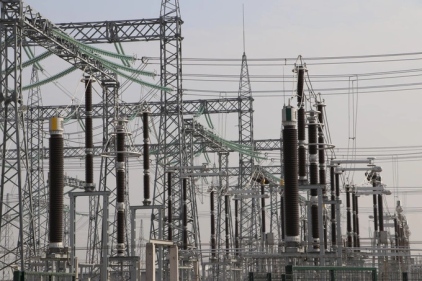
A 500-kilovolt substation, Koltsevaya, was commissioned in Tashkent province on Nov. 7, a project that will make electricity supply more reliable for the capital and part of the province, the Energy Ministry of Uzbekistan’s press service said.
The facility will also allow load to be distributed more evenly across existing power grids. The project, carried out with World Bank participation, cost $171.4 million.
“The 1,602 MVA substation is one of the largest and most modern high-voltage infrastructure facilities in Uzbekistan,” the ministry’s statement said.
The project included 213 km of 220 kV overhead lines and 72 km of 500 kV lines, a total of 285 km of new high-voltage lines. The new facilities are now being integrated into the national power system.
The World Bank has said Koltsevaya is the country’s first substation to be operated and monitored with modern digital technologies. It will receive power from plants in Syrdarya province and from wind farms in the country’s southwest.
The substation is part of the $380 million “Transformation of the Power Sector and Sustainable Power Transmission” project, implemented by National Electric Grids of Uzbekistan with World Bank financing and approved in 2021. The project also provides for reconstructing, modernising and expanding 22 outdated high-voltage substations, building power lines in almost all provinces, and deploying modern technologies to improve monitoring and management of the transmission system.