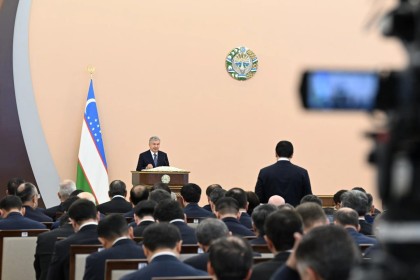
Uzbekistan plans to step up manufacturing of finished goods from domestically produced raw materials, to boost processing volumes, and revise customs duties on imported raw materials for local businesses, the president Shavkat Mirziyoyev announced at a meeting on February 13.
According to the presidential spokesman, the facilities created for processing of gold have already yielded tangible results. In 2025, jewelry manufacturing increased 3.3-fold, reaching 13 trillion soums in value. An additional 1.3-fold increase is planned for this year.
The electrical engineering industry has deep processing capacity for 160,000 tons of copper annually. However, in 2025, companies manufactured only 92,000 tons of copper. The president pointe to the need to increase manufacturing volumes and the share of copper extracted from ore.
Incentives and Duties
According to official figures, last year, electrical engineering companies took advantage of incentives totaling 27 billion soums, which increased exports by $83 million and generated an additional 46 billion soums in budget revenue. In this regard, companies have requested an extension of the import duty exemption for aluminum wire rod, which is not manufactured domestically.
Similar duties currently apply to precious and semi-precious stones for the jewelry industry, heat-resistant paints for metallurgy, and citrus concentrates used by food companies. The President instructed officials to completely review the import duties on raw materials for local producers.
Creating Raw Material Reserves
Shavkat Mirziyoyev emphasized that the creation of a guaranteed raw material base for carpet manufacturers had enabled the industry to double exports in three years. In the furniture industry, manufacturing has increased 1.4-fold over two years, thanks to simplified timber import conditions.
Business leaders also raised the issue of stockpiling polymers (for the furniture industry), aluminum raw materials (for door and frame manufacturers), pigments and fragrances (for household chemicals), and paper and cardboard for product packaging.
He underscored that with preferential financial resources for purchasing raw materials during periods of low global prices and partial compensation for transportation costs, such industries could provide additional support for economic growth.
He gave directives to determine raw material needs of small businesses, optimal supply countries, purchase volumes and prices calculated, taking logistics into account, and the necessary reserves be built up.
In January, Uzbekistan reintroduced zero customs duties on 82 types of raw materials and semi-finished products, and these duties were also extended for a number of food products and children's clothing.
Alfiya Musina, Director of the Association of Soft Drinks and Juice Producers of Uzbekistan, previously called for the import duty on concentrates, including orange and mango, to be waived.