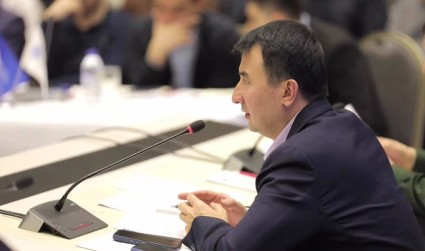
Uzbekistan has enhanced oversight over export of pulp and cotton products due to the risk of sanctions, announced the Deputy PM Jamshid Khodjaev on Saturday at an open dialogue with businesses in Tashkent province.
Shakirjon Dodojonov, director of the foreign-invested company Bumfa Group Asia (which manufactures household and sanitary paper goods), stated that the Customs Committee had effectively suspended the company's exports as of January 7.
According to him, the official reason for restrictions has not been unveiled and that restrictions led to 100 workers being placed on administrative leave, while losses stand at over 2 billion soums.
Chief of the Foreign Trade Department of the Ministry of Investment, Industry, and Trade Inomjon Abdurakhmanov stated that the procedure for issuing the relevant permits had already been drafted and would be submitted to the Cabinet of Ministers shortly. Once approved, the department will be able to issue approvals to exporters.
"I would like to remind you of one thing, dear entrepreneurs. In general, we're not talking about banning the export of cellulose and similar goods, but about oversight. And strict controls—and this is an initiative not just of Uzbekistan, but of all manufacturers. If we don't conduct the necessary checks, the entire system could be subject to sanctions. And if it's subject to sanctions, you won't be able to receive payments—the funds won't be processed through, and the situation will become extremely difficult," the Deputy Prime Minister stated.
In this regard, checks are being conducted over the export of cellulose and cotton wool, including identifying buyers and reviewing their information.
Entrepreneurs also complained about delays from banks. According to business leaders, funds under export contracts received as early as December 2025 are not being released.
Deputy governor of the Central Bank Abrorhuja Turdaliyev explained that banks had the right to suspend operations under export contracts if sanctions risks are identified.
"If your export contracts include counterparties on the SDN list or the products could be used for dual-use purposes—in other words, if your goods are sold to Russia or to companies exporting to Russia—these contractual relationships must be terminated," he said.
According to him, banks' refusal to credit funds under such contracts is aimed at protecting the entrepreneurs themselves.
"If banks refuse to credit these funds to your account, this is for your own good. If transit payments are accepted, this could result in sanctions for both the bank and you," the Central Bank representative noted.
He reminded that there were already companies in Uzbekistan subject to sanctions.
"You know that one or two companies in Uzbekistan have already been included on the SDN list, and their settlement activities have been suspended. Their export volume was only approximately $10,000-$15,000," the Deputy Chairman of the Central Bank stated.
He added that the products of certain companies could potentially be used for military purposes, and therefore banks have the right to request additional confirmation. An officials of Bumfa Group Asia pointed out that there was a significant difference between cellulose and cotton wool. The Deputy Chairman of the Central Bank proposed holding a separate meeting with banks to discuss the freezing of funds.
In October, the European Union added Uzbek businessman Rustam Muminov to the 19th sanctions package, citing his alleged involvement in supplying cotton cellulose to Russian gunpowder factories. According to Brussels, he controls the Fergana cotton cellulose plant, Farg'ona Kimyo Zavodi, whose products were allegedly supplied to the Perm and Kazan gunpowder factories. These materials could have been used in the production of weapons for the Russian armed forces.