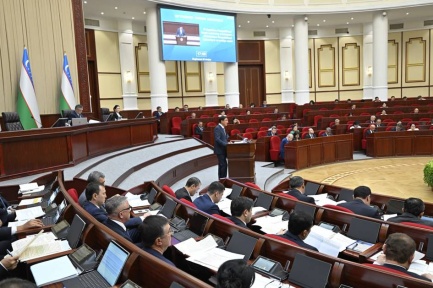
A Livestock and Pasture Development Agency will be established under the Ministry of Agriculture. It will be formed on the basis of the existing Veterinary and Livestock Development Committee. This initiative was announced during the government meeting chaired by the president focused on improving governance in food safety and supporting the livestock sector.
Global analysis indicates that over the past 25 years, cattle populations have shrunk by 12% in 42% of countries worldwide. This decline is primarily driven by skyrocketing feed costs, droughts, environmental challenges, high interest rates, and shrinking profit margins. Consequently, average global meat prices have surged to record highs.
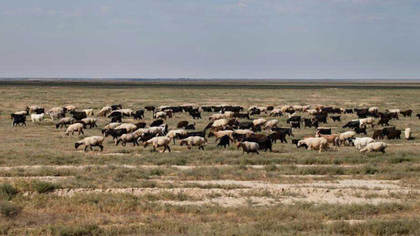
As emphasized during the meeting, Uzbekistan possesses immense untapped potential for livestock development. While the country boasts 16 million hectares of pastures, only about 10% of this resource is currently utilized.
The newly formed agency has been tasked with expanding livestock numbers to 16.5 million cattle, 30 million sheep and goats, and 141 million poultry. Plans also include boosting meat and dairy processing rates to 50%, raising the share of pedigree livestock to 90%, and expanding the cultivation area for forage crops by 1.5 times.
To broaden the feed base and enhance livestock breeding, one district in Karakalpakstan and one in each of the country's provinces will be specifically designated for livestock specialization.
In these selected districts, farmers will be permitted to repurpose 50% of their cotton and grain fields to cultivate forage crops, backed by subsidized loans at an annual interest rate of 10%. Furthermore, all farming enterprises will be allowed to construct light-structure shelters, feed warehouses, and silage pits on up to 0.2 hectares (20 sotkas) of their leased land, entirely free from bureaucratic red tape.
By the end of the year, the government aims to introduce livestock breeding across 28,700 farms that hold at least 10 hectares of land, with a target of raising 2 million head of cattle.
Substantial financial support measures have been outlined to bolster the livestock sector. Starting June 1, commercial banks will issue loans with a maturity of up to 10 years at a 10% annual interest rate, featuring a generous four-year grace period. Furthermore, importers of pedigree livestock will be completely exempt from value-added tax (VAT) until 2029.
To fund these initiatives, the government will deposit 1 trillion soums and $50 million into commercial banks at a 6% annual interest rate. These resources will back 1,500 projects valued at 5.5 trillion soums this year, creating 25,000 jobs and expanding the national cattle herd by 400,000 head.
A new program focusing on workforce training and livestock breeding genetics will also launch. Beginning June 1, leading agricultural universities will host intensive 10-day courses on artificial insemination. The program intends to train at least 1,000 specialists annually and equip them with the necessary tools free of charge.
Additionally, smallholders and households will receive direct subsidies for breeding improvement. The state will pay 500,000 soums for each pedigree calf born via artificial insemination, and 700,000 soums for those resulting from embryo transfers. An additional 50 billion soums has been earmarked to fund these breeding subsidies.
Stay up to date with all the latest news: