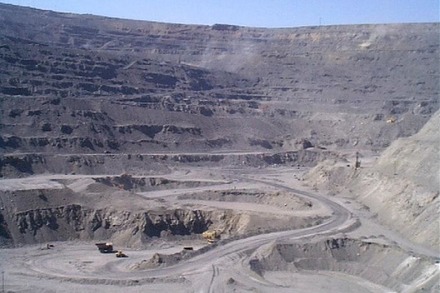
China was the world’s largest gold producer in 2025, with 384.3 tonnes, up 1.1% from a year earlier, while Russia ranked second with 345 tonnes, up 4.5%.
Australia (293.2 tonnes), Canada (213.3 tonnes) and Peru (208.9 tonnes) followed. The five countries together accounted for 37.9% of global output.
Ghana (187.3 tonnes), the United States (157 tonnes), Uzbekistan (125.4 tonnes),Mexico (113.5 tonnes) and Indonesia (104.2 tonnes) completed the top ten. Kazakhstan was 15th with 82.4 tonnes, while Kyrgyzstan, with 23.5 tonnes, fell outside the top 20.
World production reached 3,800 tonnes in 2025, up 2% from 3,700 tonnes in 2024, according to the World Gold Council. Output is up 13.6% over ten years from 3,400 tonnes in 2015. The sharpest decline was in 2020, at 4.4%. Production has risen every year since 2021, but growth has not exceeded 3.5% and was below 1% in 2023 and 2024.
Global demand, including over-the-counter trading, exceeded 5,000 tonnes for the first time in 2025, the council said.
Gold is used in jewelry and electronics, and also serves as an investment asset and a tool for building state reserves. The U.S. Geological Survey estimates that jewelry accounts for 40% of consumption, physical bars 24% and purchases by central banks and other institutions 21%. Official coins and medals, and electrical and electronics uses, each account for 7%, with other uses at 1%. The estimates exclude exchange-traded funds. As investment demand rises, use of gold in jewelry and some other industries is shrinking.