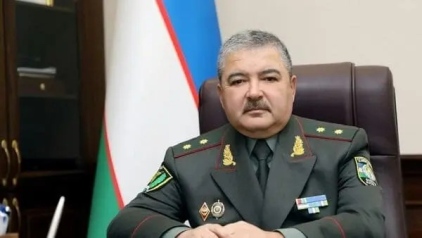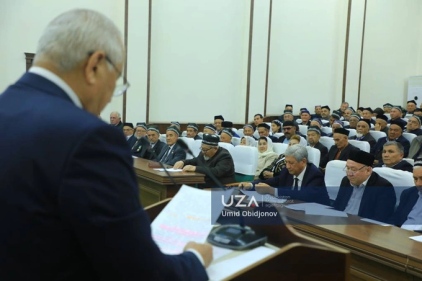
Nuriddin Ismoilov, speaker of the Legislative Chamber of Uzbekistan’s Oliy Majlis, proposed at a plenary session on Nov. 24 that MPs study the text of President Shavkat Mirziyoyev’s “Letter to my beloved grandson Shavkatbek, written in flight [to Jordan].”
Opening the session, the speaker noted that the letter had been made public the previous day, featured in television news programs and published in newspapers. MPs, he said, had also been exchanging views since the morning on its content and meaning.
“Without a doubt, we believe every MP and every staff member should reflect deeply on it. It is a letter of real substance,” Ismoilov said.
According to the speaker, the letter addresses relations between the older and younger generations, questions of upbringing, wishes for future generations, the lives of the older generation and the conditions created for today’s young people.
“So I think we need to study this letter in our party factions and committees, so that each of us can draw our own conclusions. After all, every one of us has a younger generation at home. We have grandchildren, we have children. From this [letter], we should understand for ourselves what kind of attention we need to give them,” he said.
In the letter, the head of state noted that his advice to his grandson represents his wishes for all the children of Uzbekistan.
MPs, senators, heads of public organizations, public figures, educators, representatives of other fields and labor veterans have been sharing their views on the letter in newspapers.
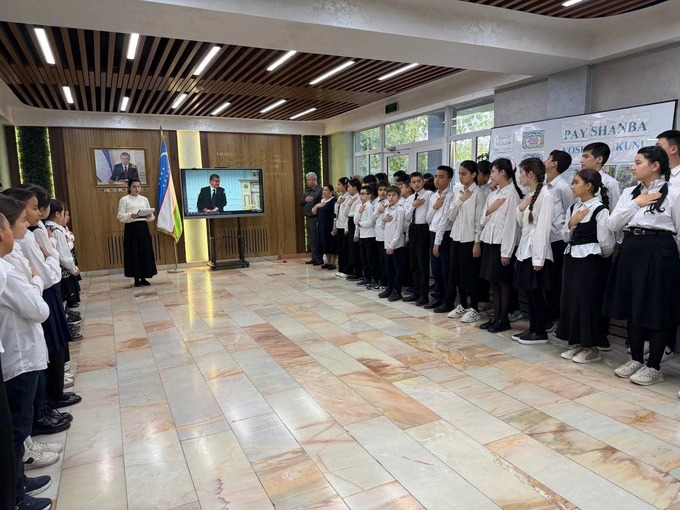
The letter is also being discussed at schools, universities and other educational institutions, as well as at enterprises and organizations across the country.
The UzA news agency reported that Sodiqjon Turdiyev, board chairman of the Nuroniy Foundation for the Support of Public Activities of Veterans of Uzbekistan, told a meeting in Sirdarya district:
“I, too, read this letter and was deeply moved. It contains important thoughts on raising children, relations between generations and a person’s responsibility in life. We also spoil our grandchildren and shower them with affection. But we must also care about their upbringing, their future and their finding their place in life. In my view, this letter is a lesson of sorts for each of us.”
Note
Such a wave of responses may, for some readers, recall older habits: the way Leonid Brezhnev’s memoir “Malaya Zemlya” entered school and university study in the Soviet Union, or the Islam Karimov era, when university students had to take annual exams on the first president’s works.
The difference to watch is whether state institutions turn the letter into something people are expected to study and praise. A published letter can simply be read, liked, questioned or ignored. Its character changes when institutions begin to organize the response.
A speaker’s call to study the text in party factions and committees, together with reports of discussions at schools, universities and enterprises, risks becoming just such a pattern, and an unwelcome one. Even without any order, it carries a hint of older times, when a leader’s words were expected to be studied and warmly received.
Such habits sit uneasily with the democratic, rule-of-law state that the Constitution proclaims, and with the work of building it in practice. That work calls for officials who answer to society and a public life with room for different opinions. A parliament serves it better by examining and questioning than by showing how attentively it has read a leader’s letter.
None of this is a judgment on a grandfather’s advice to his grandson. The concern is the response around it, and whether people remain genuinely free to take it or leave it.
Stay up to date with all the latest news: