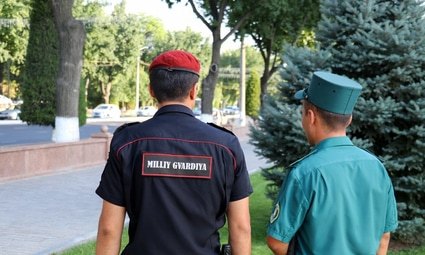
President Mirziyoyev has signed a decree introducing a new operating system for public safety work within the country's police bodies.
Under the decree, the public safety units of the Interior Ministry's local departments will be restructured into an integrated system built around the following priority mechanisms:
- responding promptly to individuals' complaints and reports, regardless of the officer's specific duties or assigned area;
- engaging in direct, open dialogue with residents and helping resolve issues that could otherwise lead to offenses;
- identifying and addressing the root causes of local crime at an early stage, and carrying out daily, targeted preventive work with individuals considered at risk of offending.
Obstructing a community police officer's performance of official duties will now carry administrative liability.
Community officers will also be granted expanded powers, including the authority to:
- issue formal warnings for first-time, minor administrative offenses in 17 categories that fall within their jurisdiction;
- impose administrative penalties for four categories of traffic violations occurring on neighborhood streets and walkways, as part of efforts to improve road safety;
- review and rule on nine categories of administrative offense cases that currently fall under the authority of district or city police chiefs and their deputies.
The decree further strengthens community officers' legal standing and expands their professional responsibilities.
To build safer neighborhoods, prevent offenses before they occur, and foster closer engagement between police and residents, the following framework will govern targeted crime-community work at the local level:
- the central objective of a community officer's work will be defined as earning a high degree of public trust and curbing crime within their assigned area;
- community officers may not be assigned additional duties beyond their core responsibilities, nor may they receive orders or instructions from officials outside their direct chain of command;
- a system will be introduced allowing residents to vote on a "motion of no confidence" in a community officer's professional performance, which could ultimately serve as grounds for disciplinary action up to dismissal from the internal affairs service;
- courts will no longer be permitted to unnecessarily request paper copies of administrative offense case files that community officers have already filed electronically.
A community officer's on-the-job performance will be evaluated primarily according to the following criteria:
- the level of public trust the officer has earned;
- the rate of offenses committed by individuals in at-risk categories, or committed against individuals vulnerable to victimization;
- the rate of repeat administrative offenses among the same individuals.
Stay up to date with all the latest news: