Low pay, arbitrary and often abusive management, forced labor, and bribery have combined to drive away the very teachers Uzbekistan needs most — and even the president admits the numbers are alarming.
Saodat, a mother of three in Tashkent, sends her children to public school five days a week — and has also paid for private tutors for years. "My children go to school just for the sake of it," she told The Diplomat in 2024, describing a system where showing up has become a formality and the real learning happens somewhere else entirely.
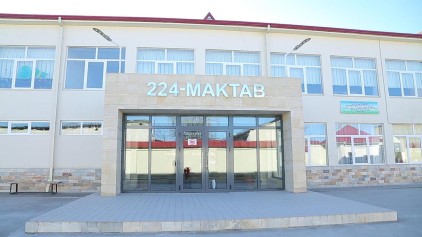
She isn't alone. Across Uzbekistan, a vast private-tutoring economy known locally as repetitorlik has become the unofficial backbone of secondary education — proof, parents and teachers say, that the country's roughly 10,000 public schools are less a place of learning than a waiting room.
The government has stopped pretending otherwise. When Uzbekistan put its 15-year-olds through the OECD's PISA exam for the first time, in 2022, the results were dismal: an average of 364 points in math against a global benchmark of 472, 336 in reading against 476, and 355 in science against 485 — among the lowest scores of the 81 economies tested. President Shavkat Mirziyoyev called the results a signal of the urgent need for reform. He later went further, disclosing that 86,000 of the country's 220,000 teachers — 37% — had been rated "unsatisfactory" in their own subject knowledge.
The money problem
At the root of it is pay — and a promise that hasn't caught up with reality. In his November 2021 inauguration speech, President Mirziyoyev pledged that teachers would reach $1,000 a month within five years; by September 2025, only about 60,000 teachers earning 10–12 million UZS (roughly $830–1,000). That sits awkwardly next to the rest of the picture: base salaries for public-school teachers currently run from about 3.2 to 4.7 million UZS a month — roughly $265 to $390 — depending on qualification category, with the sector-wide average sitting near $385, well under half of what was promised. Officials insist teachers can earn far more, up to 10–20 million UZS, by clearing advanced certification exams, but barely 3% of teachers actually reach the 10-million mark according to the government's own figures, and that opportunity is thinner still outside Tashkent, where fewer teachers have access to the exams that unlock it. A base-pay increase took effect in October 2024, but critics say it still doesn't cover a family's basic costs.
Teachers who can leave, do — for private schools, tutoring centers, or abroad — and the resulting shortage is severe enough that since 2021, third-year students at teaching colleges have been allowed to run their own classrooms. To make ends meet, many of the teachers who remain lean on the same private-tutoring market that's hollowing out trust in the classroom — and reporting from Tashkent has described teachers favoring, and quietly penalizing, students based on whether their families pay for extra lessons or give gifts.
No room to push back
Part of what's pushing talented people away from teaching has nothing to do with the salary line. Uzbek schools are still run on a management model inherited largely intact from the Soviet era: a single, largely unchecked principal who answers mainly to local government officials rather than to any independent professional body — and both routinely treat teachers as subordinates to be disciplined rather than professionals to be managed.
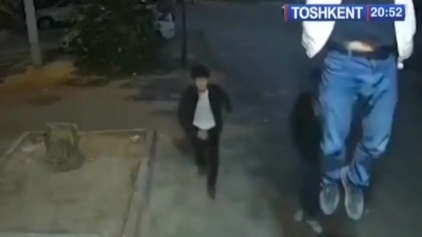
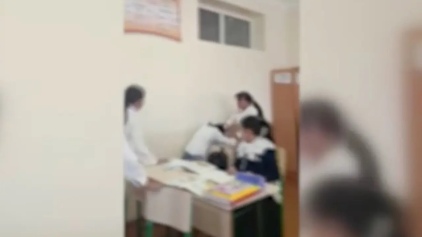
The clearest example came in February 2022, when the principal and a group of teachers at a school in Uzbekistan's Andijan province were made to stand before a room of parents, heads bowed, and beg forgiveness after too few of that year's graduating class had passed university entrance exams — the byproduct of a 2020 government rating system that scores schools by how many students they get into college. One teacher caught up in the episode said that colleagues were left regretting their choice of career: "There are young teachers who are really regretting getting into this line of work." It wasn't an isolated case. In March 2026, a district mayor in Uzbekistan's Navoi province ordered an entire school's teaching staff to the local administration building and kept them standing for nearly an hour — some of them fasting at the time — after students struggled to answer his questions during a visit; two assistant principals resigned afterward. A year earlier, a Tashkent principal was caught on video berating female teachers in front of first-graders. Local officials, rights monitors note, retain outsized sway over schools, and educators have little real ability to push back.
The abuse runs in both directions of the hierarchy, too: district officials have themselves been filmed beating and humiliating school principals over matters as minor as a poorly attended Independence Day celebration — a reminder that principals aren't the top of this chain of command; they're often just relaying pressure from above.
The effect on recruitment is exactly what you'd expect. Teacher-training advocates note that bright, promising graduates now rarely choose pedagogical universities in the first place, and multiple reports describe the desirability of teaching sharply declining among Uzbekistan's younger generation — not just because of the pay, but because of what the job has come to mean.
In the OECD's 2024 survey of teaching conditions, roughly half of Uzbek teachers named administrative paperwork as a major source of stress.
Who You Know, or Uzbek nepotism
Layered on top is a culture of favoritism Uzbekistan's own institutions have acknowledged. The country's score on Transparency International's Corruption Perceptions Index fell to 32 out of 100 in 2024, ranking it 121st of 180 countries — its first decline since 2012 — and its own parliament and anti-corruption agency have flagged education, alongside healthcare, as among the most graft-prone sectors in the country. Much of it runs on what's known locally as tanish-bilish — roughly, "who you know" — rather than cash bribes alone, though prosecutors have brought cases too: in 2024 alone, the general prosecutor's office reported 83 corruption cases in education, most tied to admissions.
Overcrowding compounds all of it. Uzbekistan's roughly 10,000 public schools were built for about 5 million students; they now serve 6.4 million, pushing many classes to 40 or 50 students against an official cap of 35 — with the gap between urban and rural access adding another layer of inequality entirely.
The reckoning
To its credit, the government hasn't buried these numbers. Mirziyoyev's own remarks did more to publicize the PISA collapse than any outside critic could have, and a genuinely large reform push has followed: a shift to 12-year schooling and unified state exams starting in the 2026/27 academic year, meant to base university and college admission on test scores rather than connections; roughly 300 new schools planned annually to keep pace with a school-age population expected to top 7.6 million this year; and, as of this past June, a $100 million World Bank-backed program aimed at basic literacy and numeracy for 2 million primary schoolers across six provinces.
None of it, though, touches the chain of command inside the schoolhouse itself — the same unchecked principals and local officials whose treatment of teachers has already pushed a generation of promising graduates toward other careers.
Whether any of it closes the gap remains an open question. The reforms are arriving for a generation of students already being educated, in effect, by two systems at once — the free one that satisfies the legal requirement, and the paid one that actually prepares them for exams. Until those two systems merge back into one, "failure" may be the most precise word Uzbek parents have for what their children are attending five days a week.