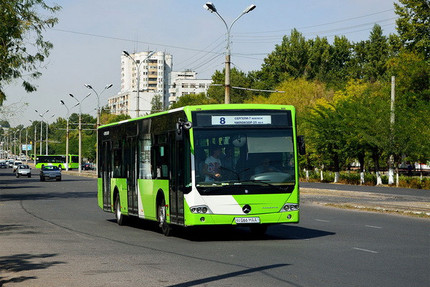
Starting Oct. 1, the single public transport fare in Tashkent paid electronically is proposed to be set at 2,500 soums. Cash fares would remain at 3,000 soums. The draft resolution from the Tashkent City Council has been posted for public discussion through Sept. 19.
Under the draft, new fare ceilings would apply to bus routes and the capital's metro system. Factoring in the incentive discount, a single electronic fare would rise 47% to 2,500 soums (up from 1,700 soums currently), while cash fares would climb to 3,000 soums. The fee for carrying luggage would be set at 4,000 soums. All figures include VAT.
The proposed increase in the electronic fare comes amid mounting costs to subsidize public transport. Forecasts show that in 2026, with services worth 2.3 trillion soums, fare revenue would cover only about 630 billion soums — roughly 27.4% of the total. The budget funding required is estimated at approximately 1.7 trillion soums.
The draft also introduces new transport-card fare plans based on the number of journeys, along with discounted and free fares for passengers transferring between modes of public transport within a one-hour window.
For bus-only travel, the following unlimited-ride passes are proposed:
- 1 day (6 journeys) — 11,500 soums, 23% discount
- 5 days (22 journeys) — 42,500 soums, 23% discount
- 7 days (28 journeys) — 54,000 soums, 23% discount
- 10 days (44 journeys) — 84,500 soums, 23% discount
- 15 days (66 journeys) — 127,000 soums, 23% discount
- 20 days (88 journeys) — 169,500 soums, 23% discount
- 30 days (130 journeys) — 250,000 soums, 23% discount
- 1 month (130 journeys) — 250,000 soums, 23% discount (currently 160,000 soums)
- 3 months (390 journeys) — 682,500 soums, 30% discount
- 6 months (780 journeys) — 1.17 million soums, 40% discount
- 1 year (1,560 journeys) — 1.95 million soums, 50% discount
For combined bus and metro travel, the proposed unlimited-ride passes are:
- 1 day (7 journeys) — 13,500 soums, 23% discount
- 5 days (30 journeys) — 57,500 soums, 23% discount
- 7 days (38 journeys) — 73,000 soums, 23% discount
- 10 days (60 journeys) — 115,500 soums, 23% discount
- 15 days (90 journeys) — 173,000 soums, 23% discount
- 20 days (120 journeys) — 231,000 soums, 23% discount
- 30 days (180 journeys) — 345,000 soums, 23% discount
- 1 month (180 journeys) — 345,000 soums, 23% discount (currently 221,000 soums)
- 3 months (540 journeys) — 945,000 soums, 30% discount
- 6 months (1,080 journeys) — 1.62 million soums, 40% discount
- 1 year (2,160 journeys) — 2.7 million soums, 50% discount
In addition, trip bundles at a 23% discount off the full fare are proposed:
- 10 journeys — 19,000 soums
- 20 journeys — 38,500 soums
- 30 journeys — 57,500 soums
The draft preserves the existing discount system for transfers made within one hour. For bus-only journeys, the first ride would cost 2,500 soums, the second 1,500 soums, and the third and subsequent rides within the hour would be free.
For combinations of bus and metro, the first ride would also cost 2,500 soums, with subsequent transfers costing 1,500 soums or being free depending on the sequence of journeys. The metro could be used only once within a given one-hour fare period; re-entering the metro would restart the 60-minute window.
In August, the Institute for the Reduction of the Shadow Economy under the Ministry of Economy and Finance proposed gradually bringing public transport fares closer to an economically justified level.
According to the institute, public transport subsidies reached 1.385 trillion soums in 2026, with subsidies covering 65.1% of the transport system's costs in Tashkent. The institute also proposed optimizing underused routes and tying payouts to carriers to service-quality indicators.
Tashkent's public transport fare was last raised, from 1,400 to 1,700 soums, in November 2023.