Elmurod Najimov, first deputy director of the Cultural Heritage Agency, has responded to remarks by Alisher Kadirov, leader of the Milliy Tiklanish (National Revival) party, who argued that a historic house in Tashkent was not worth preserving.
The MP's comments sparked widespread debate. Kadirov had said: "They're protecting some building in the center of Tashkent that could just as well be demolished, calling it cultural heritage — going to court over it, fighting over it. Nobody needs it, some house that belonged to a Russian artist. What do we need it for? What value does it have for us as cultural heritage? How important is it, really? Does it come anywhere close to a thousandth of the value of Shah-i-Zinda [a 14th-15th century mausoleum complex in Samarkand — ed.]? Whoever the artist was."
"This isn't an agency for universal human values — it's an agency for our national culture. Its first priority should be our own national culture," he said.
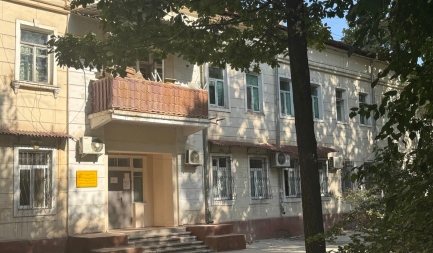
The Cultural Heritage Agency clarified that the building in question is a two-story house at 7 Babur Street in Tashkent. As Gazeta.uz has previously reported, the building has been at the center of a dispute for years, repeatedly removed from and then restored to the National Register of Tangible Cultural Heritage Sites.
In 2018, then-Tashkent Mayor Jahongir Artykhodjayev allocated the plot beneath the house to the company Universal Packing Masters for the construction of a multistory residential building. The construction rights were later transferred to the company Jemchug House. Most residents have since been relocated, and the company has sought through the courts to evict the one remaining owner. In early September, the Cultural Heritage Agency asked the Prosecutor General's Office to review the legality of the former mayor's decision.
"A cultural heritage site cannot be evaluated on the basis of whether we need it today or not," the agency said in a statement. "The building... was constructed in 1935. According to published historical and expert materials, it is associated with the renowned architect Alexei Shchusev, who worked in Tashkent. But the building's history is not limited to its architect alone. Over the years, it has been home to scholars and professors who made significant contributions to the development of science and culture, including academicians Tashmukhamed Kori-Niyazov and Vasily Shishkin, as well as specialists such as Rakhim Atajanov and Natan Mallaev."
"This is not simply an old residential building. Its history is tied to the development of architecture, science, and urban culture in 20th-century Tashkent. Its architectural design holds historical significance in the context of how Tashkent's urban environment took shape in the first half of the 20th century. The history of the site's legal status is also of fundamental importance," the agency emphasized.
In 2020, the agency's Scientific Expert Council approved the building's reinstatement to the National Register of Tangible Cultural Heritage Sites. In 2021, the agency rejected a proposal to remove it from the register. On August 5 of this year, the agency received another request to delist the building — and once again denied it.
"When the argument is made that 'it's the house of a Russian artist, why do we need it,' a fundamental question arises: since when does a person's ethnicity determine a building's historical value? Cultural heritage has no nationality," said Najimov, the agency's first deputy director.
"It doesn't become less valuable simply because it's associated with someone of a different ethnicity. In fact, Tashkent's history is the history of a city shaped by the labor, knowledge, culture, and contributions of people from many different backgrounds," he stressed.
"Trying to divide cultural heritage into 'ours' and 'theirs' along ethnic lines is the wrong approach. If we start determining the value of a historic site based on the ethnicity of the architect, artist, scholar, or anyone else connected to its history, where do we draw that line tomorrow? Statements like this risk turning a professional matter of heritage preservation into a question of ethnic division — and that risks creating unnecessary social tension," the agency official said.