As Generation Z-led protests continue to reshape political landscapes across the world, Uzbekistan is taking a markedly different approach to its younger generation, placing a former provincial governor known for his tough administrative style in charge of the country's education system, with an emphasis on discipline, attendance monitoring and stricter enforcement of existing rules.
Erkinjon Turdimov, appointed first deputy prime minister and minister of education and science on October 9, has made clear that his immediate priority is not a sweeping overhaul of the education system but restoring order and enforcing compliance. His emerging approach includes involving law enforcement officers in efforts to bring absent pupils back to school and introducing a nationwide digital system to monitor attendance in classrooms.
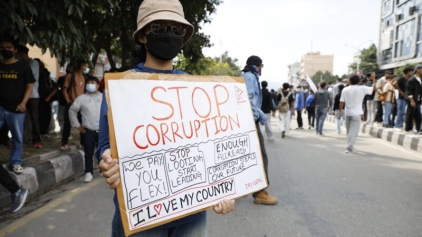
The developments come against the backdrop of a growing wave of youth-led protests internationally. Young people are demanding that governments listen to them and address structural problems, while Uzbekistan's new education leadership is putting renewed emphasis on discipline and institutional control.
A governor rather than an education specialist
Turdimov's appointment followed President Shavkat Mirziyoyev's decision to merge the Ministry of Preschool and School Education with the Ministry of Higher Education, Science and Innovation into a single Ministry of Education and Science.
Explaining the choice, Mirziyoyev said that the number of educational institutions and students had increased, but the quality of education had failed to keep pace.
"Numbers have grown, but quality is lacking," the president said at a meeting with investors and businesses in New Tashkent. He added that he had not appointed someone who had served as governor of four provinces to lead the Education Ministry without a particular reason.
Turdimov, 57, has spent much of his career in regional administration. He headed Navoi province from 2008 to 2016, Surkhandarya from December 2016, Samarkand from July 2018 until November 2024, and Syrdarya from January 2025 until his appointment to the Cabinet of Ministers.
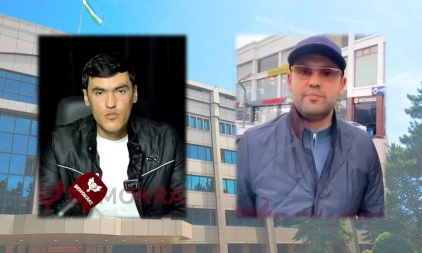
His background is in administration rather than education. In a recent interview with journalist Karimberdi To'ramurod, Turdimov openly acknowledged that he was not an education specialist and was still learning about the sector.
"I am not a person from the education sector. I don't know education. I am learning now. I may not be able to teach a lesson, but I know how to manage," he said.
He added that he did not expect to introduce revolutionary changes to the education system but intended to establish order.
"I may not be able to make world-changing revolutionary reforms in the education system, but I will establish discipline in the system," Turdimov said.
That statement offers perhaps the clearest indication of the management philosophy he intends to bring to the ministry.
Police, digital surveillance and the attendance problem
The minister's first major initiatives suggest that enforcement will be a central component of his approach.
Speaking to journalists on November 10, Turdimov said school attendance in Uzbekistan currently stood below 50%, a figure he described as a serious problem requiring more decisive action.
He said that during his tenure as governor of Syrdarya province, he personally monitored attendance at individual schools and enlisted the assistance of internal affairs officers. According to Turdimov, the intervention helped raise attendance to 80%.
"We must bring students back to school. Since explanations and awareness-raising efforts proved insufficient, we were compelled to involve internal affairs officers," he said.
The minister now wants to extend this approach nationally. A digital attendance monitoring system is being piloted in schools and classrooms in Tashkent, with plans to roll it out across the country.
The technology is intended not only to record how many pupils attend individual classes but also to allow education authorities to monitor teachers' work.
"This will allow me to personally see how many students are present in each classroom and observe how the teacher is conducting the lesson," Turdimov said.
His comments also reveal a more complicated picture behind the attendance figures. He acknowledged that some children are absent because they work to support their families, while others attend educational centres or receive private tutoring instead of going to regular schools.
Some parents, he said, believe their children have a better chance of entering university through private tutoring than through the public school system.
Turdimov conceded that improving teaching quality is essential to addressing the problem, acknowledging that achieving full attendance would be impossible without better instruction.
The admission raises an important question about the government's priorities: whether attendance can be sustainably improved through surveillance and police intervention if the quality of education itself remains a reason for pupils and parents to turn away from public schools.
Universities also face a tougher management approach
The emphasis on discipline is extending beyond schools to higher education institutions.
At a meeting on November 6, Turdimov issued stern warnings to four university rectors over shortcomings in their institutions. He later clarified that none had been dismissed, despite reports suggesting that several university heads had lost their positions.
A special working group has been established to assess their performance and determine whether they should remain in office.
In another example of the problems facing higher education, Turdimov said that ten students introduced by a university rector as among the institution's best performers had failed to achieve even a passing grade in a standardised test.
The minister's comments point to genuine concerns about academic standards and institutional accountability. However, the methods being adopted suggest that the new leadership intends to address these shortcomings primarily through tighter administrative supervision and pressure on institutional managers.