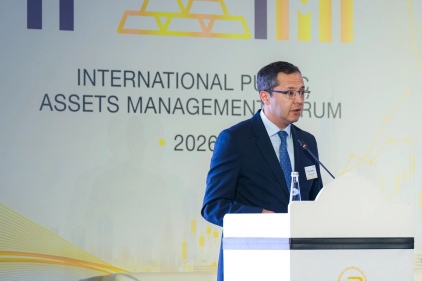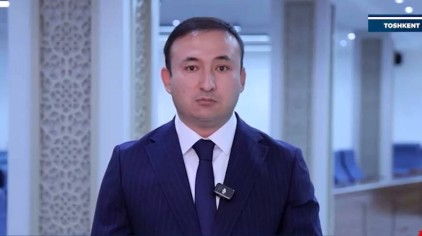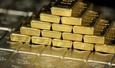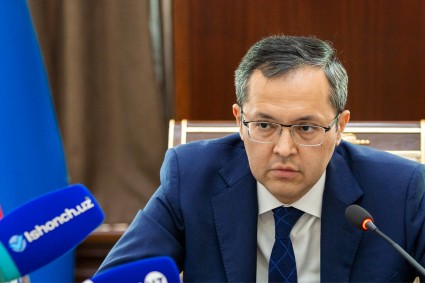
At a press conference on Wednesday, the Central Bank governor Timur Ishmetov addressed the potential impact of a global gold price drop on the currency market and inflation. He also clarified why Uzbekistan paused its gold exports during the first quarter.
“While gold prices certainly play a significant role, I believe it would be inaccurate to link inflation directly to a specific price level for gold,” Ishmetov stated. “The real impact comes from how we manage the cash flows and revenues generated by those price fluctuations.”
The Central Bank chief reaffirmed his commitment to a floating exchange rate policy. “As you’ve observed, the exchange rate strengthened last year due to significant foreign currency inflows. It weakened slightly at the start of this year but recovered by March. Overall, the currency has remained virtually stable since the beginning of the year,” he noted.
He further detailed how gold pricing feeds into the national budget: “Gold price shifts definitely matter. We purchase gold from domestic producers at global market rates, settling the transactions in our national currency. Consequently, when prices are high, producers earn additional income, which in turn boosts tax revenue for the state budget.”
In this context, the governor clarified that the Central Bank does not utilize currency interventions to manipulate the exchange rate:
“Our participation in the foreign exchange market is roughly proportional to the volume of gold we purchase. In other words, we do not—and will not—have a policy of increasing or decreasing the supply of currency to artificially influence the exchange rate.”
He emphasized that the lack of gold exports has had no direct negative impact on the economy.
“When we buy gold from producers, it enters our reserves. Exporting it later simply shifts the composition of our international reserves: the share of gold decreases while the foreign exchange portion increases by the same amount. Consequently, our foreign currency liquidity rises. Therefore, we do not export gold just to boost statistical data or the trade balance,” he said.
He concluded by stating that gold sales are conducted as part of a broader reserve management strategy.
“We have our own strategy: we maintain the necessary level of liquidity and aim to sell gold during favorable market periods. Based on our forecasts, we expect total gold exports for the year to reach our original targets,” Ishmetov concluded.
Follow us on: