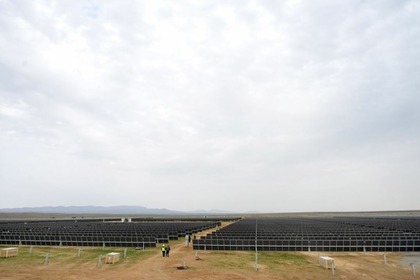
Uzbekistan's electricity production in 2025 topped 86.7 billion kWh, a 6% increase from the previous year. In 2024, the country produced 81.5 billion kWh of electricity, the Ministry of Energy press service said.
Of the total production, 16.8 billion kWh came from renewables - solar, wind, and hydroelectric power plants, increasing by 29% compared to 2024.
The volume of electricity produced by solar and wind power plants alone reached 10.5 billion kWh, a 2.1-fold increase over the year, which helped save 3.2 billion cubic meters of natural gas and with 4.7 million tons of harmful emissions were prevented, the report noted.
There are now 148 power plants in Uzbekistan totaling 25,797 MW. These include thermal power plants and combined heat and power plants (CHP) totaling 17,551 MW, hydroelectric power plants totaling 2,441 MW, PV plants totaling 3,930 MW, wind power plants totaling 1,652 MW, and combined heat and power plants totaling 223 MW.
42 projects with 4,647 MW total capacity were commissioned in 2025. These include five solar power plants totaling 1,413 MW, four wind power plants totaling 752 MW, ten battery storage systems totaling 1,245 MW, one thermal power plant totaling 1,065 MW, five hydroelectric power plants totaling 168 MW, and two cogeneration facilities totaling 102 MW.
Eleven substations with a total capacity of 1,614 MVA (megavolt-amperes) and 420 km of power grids have also been commissioned. Construction has begun on 21 new projects with a total capacity of 3,508 MW, including solar, wind, battery, and cogeneration facilities, as well as substations, power grids, and gas grids.
A plant producing 155 hydroelectric units per year was launched in Bostanlyk district of Tashkent province, and a facility producing 15,000 transformers per year was launched in Angren. Furthermore, the first national hydroelectric power plant with a capacity of 38 MW, built entirely from local components, was commissioned in the Uychi district of the Namangan province.
In 2025, the number of electricity consumers exceeded 8.7 million: the number of residential consumers increased by 3.2%, and the number of legal consumers by 7.4%.
According to the Ministry of Energy, the deployment of low-power solar panels also progressed rapidly, with their total installed capacity reaching 2 GW. The solar collectors held nearly 5 million liters of electricity. Households that installed solar panels received 201.7 billion soums in subsidies, while businesses received 121.2 billion soums.
Earlier, Energy Minister Jurabek Mirzamakhmudov stated that the commissioning of new power capacity allowed Uzbekistan to transition to net electricity exports by 2025. Supplies to Kyrgyzstan and Tajikistan helped reduce the risks associated with low water levels in those countries. In total, it is planned to send 2.6 billion kWh of electricity to neighboring countries.