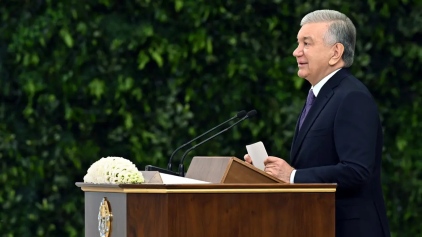
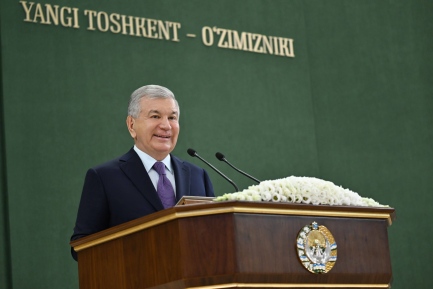
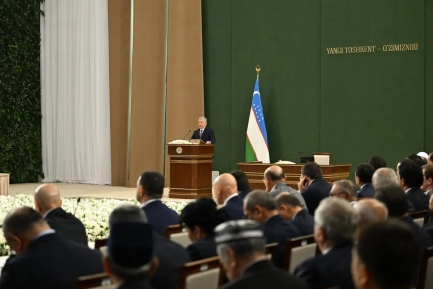
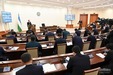
Uzbekistan aims to slash bureaucratic red tape by half and eradicate corruption within the construction sector through the strategic deployment of technology. These objectives were the focal point of a meeting chaired by the president Shavkat Mirziyoyev Tuesday.
Shavkat Mirziyoyev highlighted a significant stagnation in land utilization: over the past four years, construction has failed to commence on 3,000 hectares out of the 11,500 hectares sold at auction. This inertia has resulted in a lost opportunity to generate 100,000 additional jobs and realize between 20 and 25 trillion soums in added value. Furthermore, 582 hectares of land and 122 state-owned properties have remained unsold for over a year.
The president noted that current privatization programs often overlook the vital role of provincial governors and fail to solicit feedback from the business community. He emphasized that the sale of state assets must prioritize provincial investment and job creation above all else. Consequently, a new mandate dictates that governors will now share equal responsibility with the State Assets Management Agency for identifying objects for privatization, ensuring their sale, and monitoring investment efficacy. Additionally, the government has decided to abolish the 14% annual surcharge on the remaining balance for properties sold via installment plans.
Addressing the systemic flaws in construction procedures, the President revealed that one-third of the 2.6 million construction-related applications filed in 2024 were rejected.
"Officials claim these were returned due to 'technical deficiencies.' But if we look deeper, the problem is much more profound. Everyone understands the reality, yet they pretend not to know—in truth, this is corruption! The only way to end this is through total digitalization and the integration of Artificial Intelligence," the president declared.
Shavkat Mirziyoyev observed that entrepreneurs are currently burdened by a fragmented, multi-stage approval process—securing design permits first, followed by architectural planning assignments—a sequence that often drags on for months. In Tashkent, these procedures have already been consolidated into a single unified step, slashing processing times by three to four times. The President has now mandated that this streamlined approach be implemented nationwide starting July 1.
Furthermore, a major overhaul of utility connections is on the horizon. Currently, developers must petition each utility provider individually for technical specifications. From July 1, the government plans to transition to a "single window" system, allowing a single application and one consolidated payment to cover all essential services, including electricity, gas, water, and sewage.
The president identified poor coordination among the 26 separate agencies within urban planning councils as a primary bottleneck for project timelines. To resolve this, provincial governors and the Mayor of Tashkent will now chair these councils, assuming direct authority to provide final, definitive resolutions for entrepreneurs.
The meeting also addressed the "Transparent Construction" rating system. Currently, the rating fails to account for machinery acquired through leasing. By including leased assets in the criteria, at least 500 companies would immediately see their rankings improve, unlocking access to a market valued at approximately 17 trillion soums. The Ministry of Construction has been tasked with creating an electronic database for leased equipment and integrating it into the evaluation system. Additionally, the President called for the removal of the current restriction that limits contractors to importing only one piece of specialized machinery per year.
Ultimately, the president ordered a comprehensive, three-month audit of every procedure in the construction lifecycle—from initial permitting to final commissioning. This audit will culminate in a resolution aimed at cutting regulatory requirements, timelines, and fees by at least half. Criticizing the bureaucratic delays that force businesses to pay taxes and loan interest on non-productive assets, he announced that the processing time for land privatization applications will be reduced to just 10 minutes, and the private sector will finally be invited to participate in the development of master plans.
Follow us on: