On June 29, President Shavkat Mirziyoyev reviewed a series of proposals aimed at optimizing the operations of community policing inspectors, enhancing public safety measures, and advancing the training framework within the sector.
During the presentation, it was highlighted that the practice of relying strictly on statistical figures and data comparisons to evaluate crime rates has not yet been fully phased out. Instead, it was proposed that the performance evaluation criteria for public safety units be restructured around a "service-to-the-community" model.
To achieve this, the initiative plans to synchronize the operations of community policing inspectors, road patrol officers, conventional patrol squads, and security services. Their responsibilities—ranging from responding rapidly to public grievances and maintaining open communication with citizens to carrying out targeted interventions with at-risk groups—will be unified into a single network. Specifically, certain traffic safety management powers will be shared with regular patrol and security units, while road patrol officers will take on selective responsibilities related to maintaining general public order.
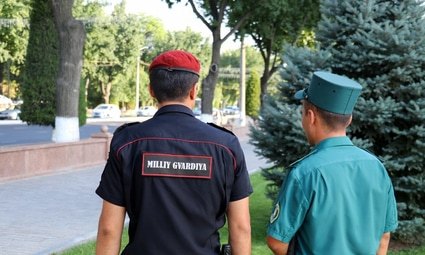
Currently, over 10,000 community policing inspectors serve across nearly 9,000 neighborhoods (mahallas) nationwide. Emphasizing that this represents a formidable force, the head of state underscored that keeping crime in check relies first and foremost on properly structuring the daily operations of these local inspectors.
The review noted that in practice, community policing inspectors have been saddled with nearly 50 extraneous tasks unrelated to their primary roles. Consequently, instead of actively patrolling neighborhoods to curb criminal activity and solve immediate community problems, they frequently find themselves bogged down by unrelated bureaucratic duties.
In light of these challenges, details were presented regarding a newly drafted bill titled “On the Status of Community Policing Inspectors of Internal Affairs Bodies.” The proposed legislation explicitly outlines the legal standing, primary duties, rights, and obligations of community policing inspectors, while firmly establishing guarantees for their professional activities, socio-legal protections, incentive systems, and accountability measures.
According to the bill, the overriding objectives for any community policing inspector will be to achieve a high level of public trust and to successfully keep crime in check within their assigned jurisdiction. Under the law, the inspector is recognized as the designated official responsible for conducting pre-investigative checks and overseeing crime prevention within their territory.
Moving forward, community policing inspectors will be tasked exclusively with duties defined by law. Their legal rights, honor, dignity, and professional reputation will be placed under explicit state protection. Furthermore, the draft legislation strictly prohibits any interference in an inspector's professional activities, as well as the assignment of unrelated tasks or unjustified bureaucratic workloads.
Under the proposed framework, community policing inspectors will have the autonomy to independently select the appropriate type of crime prevention measure for their area. They will be authorized to issue mandatory compliance directives, submit formal regulatory motions and demand their enforcement, develop tailored methods for local prevention campaigns, and process relevant legal documentation within their jurisdiction.
Concurrently, the bill binds inspectors to strict professional obligations. They must rigidly adhere to the code of professional ethics and service discipline for internal affairs personnel, accept and rapidly respond to any form of citizen report regarding law violations, immediately arrive at crime scenes to initiate verifications, and render first aid or other vital emergency assistance to victims.
The draft legislation also significantly reinforces the socio-legal protections available to these local officers. Provincial and city administrations (khokimiyats) will be legally mandated to supply inspectors with dedicated office spaces and adequate housing. Furthermore, the bill introduces administrative liabilities for anyone attempting to obstruct an inspector's professional duties, alongside enhanced pension guarantees for long-serving personnel.
To maximize their field efficiency, the reform plans to expand the scope of inspectors' enforcement powers. Specifically, their authority to independently impose administrative penalties for select low-level offenses will be widened, and they will be granted the legal mechanism to issue official administrative warnings for certain statutory violations.
Approving the entire suite of proposals, President Shavkat Mirziyoyev directed responsible officials to systematically relieve community policing inspectors of all extraneous duties, solidify their legal status and social safety nets, fully digitalize the public safety network, and modernize the overarching personnel training curriculum to meet contemporary security standards.
Stay up to date with all the latest news: