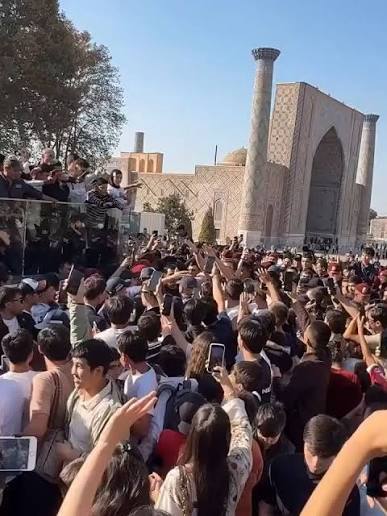
President Shavkat Mirziyoyev has reviewed the Green Samarkand model, an initiative designed to transform Samarkand into an environmentally sustainable and climate-resilient green city in the Central Asia, the presidential press service said.
The project is scheduled to run through 2030. Key targets include preventing the emission of 51,200 tons of potential pollutants, slashing the concentration of PM2.5 and PM10 particles by 50% through the installation of gas purification equipment, cutting construction dust by 80%, reducing transport emissions by 50%, halving the area occupied by landfills, and expanding green spaces in urban areas to an average of 30%.
To bring the project to life, a dedicated project office named "Yashil Samarkand" (Green Samarkand) will be established. This office will coordinate initiatives across urban planning, ecology, transport, construction, tourism, industry, and public utilities.
Furthermore, Samarkand plans to introduce a specialized ecological and urban planning regulatory framework. New and reconstructed properties will face mandatory "green building" requirements, including the integration of energy- and water-saving technologies, as well as waste sorting and recycling systems. Facilities that fail to meet these environmental standards will not be cleared for operation.
In the transportation sector, the initiative outlines the procurement of 50 large-capacity electric buses, the installation of 150 new traffic lights, and a complete transition of public transit and taxis to electric vehicles by 2030. Plans also include introducing a Park & Ride commuter parking system, establishing pedestrian-only tourist zones, and gradually restricting personal vehicles from entering the city center.
The project places a strong emphasis on developing water and green infrastructure. Samarkand will see the creation of at least four artificial lakes and reservoirs, the construction of 10 new fountains alongside the modernization of existing ones, and the restoration of a 319-kilometer network of traditional irrigation channels (aryks).
To combat dust, lower air temperatures, and form a natural barrier around the city, a 102.7-kilometer-long green belt spanning 3,532 hectares is proposed along the New Outer Ring Road.
Furthermore, a dedicated 300-hectare district named "Green City Samarkand" will be developed. Residential buildings, offices, tourist facilities, and public spaces within this district will be constructed strictly in accordance with international green city standards.
Industrial reform forms another core component of the strategy. Factories will be required to adopt the best available eco-technologies, implement Zero Visible Emission systems, and integrate digital ecological monitoring. Eight category I and II enterprises deemed severe environmental hazards will be relocated outside city limits.
For waste management, the "Zero Waste Samarkand" framework will be deployed, featuring comprehensive trash sorting and recycling alongside a digital tracking system to flag illegal dumping.
The grand strategy also details the creation of a Carbon Neutral Samarkand roadmap, the launch of crowdfunding and financing platforms for eco-projects, and an open platform for monitoring environmental metrics. Additionally, the initiative will introduce the "Green Samarkand" brand, a "Green Hotels Samarkand" rating system, and targeted biodiversity conservation programs.
Ultimately, the project's architects aim to position Samarkand as Central Asia’s capital for green investments and innovation. President Mirziyoyev approved the proposals and ordered relevant officials to ensure their swift execution.
Stay up to date with all the latest news: