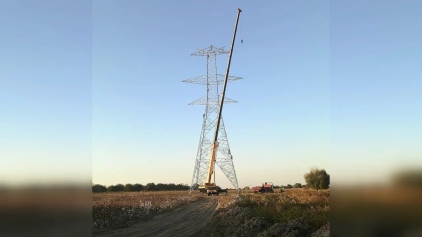
A new double-circuit 500-kilovolt (kV) power transmission line is being built from Samarkand to Tashkent, the Energy Ministry said.
The ministry said the major project is being implemented in Samarkand province's Nurabad district in partnership with Saudi Arabia's ACWA. It includes a 1,000-megawatt (MW) solar photovoltaic plant, a 1,336 megawatt-hour (MWh) energy storage system, and new 500 kV and 220 kV transmission lines.
A key part of the project is a 350-km line running from Nurabad district to the Halka substation in Tashkent province. It will pass through Samarkand, Jizzakh, Syrdarya and Tashkent provinces. Foundation work for the pylons has been completed, and installation has begun.
The line will use newly designed 500 kV double-circuit pylons, deployed in Central Asia for the first time. The pylons were developed to a special new design, and their technical solutions were tested by India's Larsen & Toubro. This makes the structures a new solution for Central Asia's energy infrastructure.
The project also includes a further 150-km, 220 kV line, which is about 50% complete. It is due to be finished in May 2027, bringing the project's total to 500 km of transmission lines.
Construction of the 500 kV Nurabad-Tashkent Halka line is scheduled for completion in the first quarter of 2028.
"The new transmission lines will help integrate the solar plant and energy storage system being built in Nurabad into the unified power grid, expand the capacity to carry electricity from new generation sources in the central area to Tashkent city, Tashkent province and the valley provinces, and improve the stability and reliability of power supply in those areas," the ministry said in a statement.
It was reported earlier that energy facilities described as the largest of their kind in Central Asia had been commissioned in Uzbekistan, that the extra fee for reconnecting consumers cut off from electricity or natural gas over debt had been scrapped, and that businesses that use electricity responsibly would no longer have to prepay 100% of their power bills.