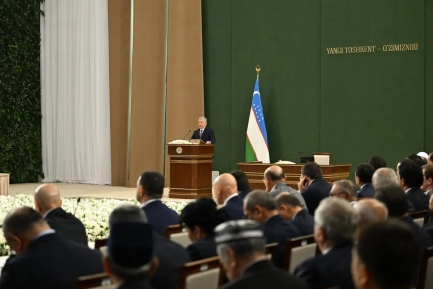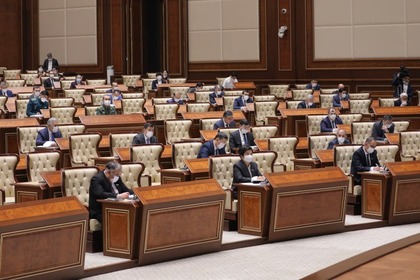
The Senate passed the Protecting the Public from Harmful Effects of Noise bill during its plenary session on June 13, the press service of the parliament's upper house announced. The document will take effect once it is signed by the president.
The bill outlines the general rules for protecting the public from noise pollution, establishes the framework for state regulation in this area, defines the powers of government agencies, and introduces measures to protect citizens.
The Committee for Sanitary and Epidemiological Welfare and Public Health has been designated as the authorized regulatory body. It will coordinate its efforts with the Cabinet of Ministers, the Ministry of Internal Affairs, the Ministry of Construction and Housing and Communal Economy, the Ministry of Employment and Poverty Reduction, the Committee for Industrial, Radiation and Nuclear Safety, as well as local government authorities.
The document sets noise exposure limits, defines actions that disrupt the peace and rest of citizens, and specifies the time frames during which such disruptions are strictly prohibited.
The bill (previously passed by the lower house of parliament) extends the nighttime quiet period from seven to eight hours, running from 11:00 PM to 7:00 AM (and from 10:00 PM to 9:00 AM on weekends and public holidays). Furthermore, construction and refurbishment work in apartment buildings that exceeds permissible noise levels will only be allowed on weekdays from 9:00 AM to 6:00 PM.
The bill also clarifies the powers of state agencies, tightens penalties for operating vehicles that exceed noise limits, and introduces a mechanism to temporarily suspend the operations of businesses or facilities that repeatedly violate permissible noise levels.
The bill also introduces requirements for importing vehicles, other means of transport, and equipment into Uzbekistan, alongside compensatory payments for the environmental damage caused by noise pollution.
The government will retain the authority to determine compensation amounts in cases where noise has harmed public health. Paying these penalties does not exempt violators from taking corrective action to eliminate and prevent further harmful noise exposure.
Furthermore, the document establishes the procedures for assessing noise pollution, as well as the rights and responsibilities of both individuals and legal entities in this area.
The legal restrictions will not apply to ambient noise generated by nature.
Exceptions are also made for noise caused by urgent and essential services. This includes activities related to crime prevention, security operations, emergency and medical rescue responses, disaster relief, and general public safety measures.
Additionally, the bill will not regulate noise generated during national holidays, major sports and cultural events, or religious rituals and ceremonies.
Stay up to date with all the latest news: